Comparisons
 RapBooster Growth Team
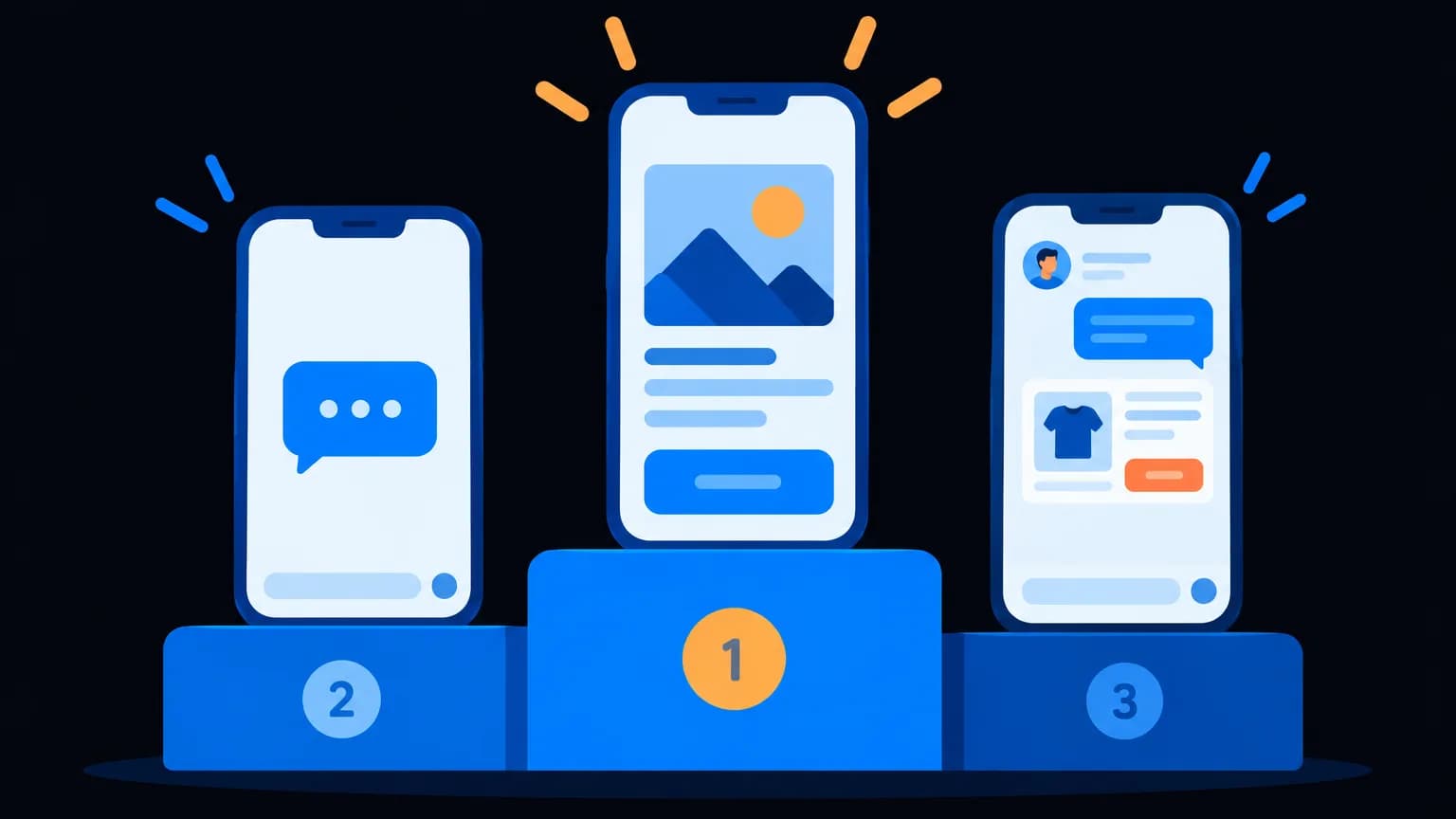
There's no single winner. SMS reaches almost every phone but is plain text. RCS upgrades SMS with images, carousels, buttons and a verified brand, inside the default messaging app. WhatsApp is best for two-way conversations, commerce and support. The winning 2026 setup: WhatsApp for conversations, RCS for rich broadcasts, SMS as the fallback.
Head-to-head comparison
| Factor | SMS | RCS | WhatsApp API |
|---|---|---|---|
| Reach | Almost every phone | Android (Google Messages), iPhone on iOS 18+ where supported | Anyone with WhatsApp |
| App needed | No | No | |
| Rich media | No | Yes | Yes |
| Buttons and carousels | No | Yes | Yes |
| Verified brand | Header ID only | Logo + verified badge | Verified badge (if eligible) |
| Two-way chat | Limited | Yes | Excellent |
| Commerce (catalogue, payments) | No | Limited | Yes |
| Read receipts | No | Yes | Yes |
| Opt-in rules | DLT (India) | Consent required | Opt-in required |
| Typical India cost (RapBooster) | Not sold by RapBooster | From ₹0.30/msg, paid from credits | ~₹0.86 per marketing msg (Meta, billed to you); 1,000 free service replies/month |
WhatsApp rates are approximate Meta charges as of Sept 2026.
When to use SMS
- OTPs and critical alerts where reach is everything
- Customers without smartphones or data
- Fallback when RCS isn't supported
When to use RCS
- Promotions that need visuals: carousels of products, offers and events
- Branded, verified alerts where spoofing is a worry (banks, airlines, delivery)
- Campaigns to audiences who haven't messaged you on WhatsApp
- Anywhere you want read and click analytics that SMS can't give
When to use WhatsApp
- Two-way conversations: sales, support, bookings
- Chat commerce: catalogues, carts, payments
- Journeys that need a chatbot and human handoff
- Customers who already message you (1,000 free service replies a month)
What does the combined stack look like?
- RCS promo carousel goes to opted-in customers. Tapping "Chat with us" opens WhatsApp.
- WhatsApp chatbot qualifies interest, answers questions and shares the catalogue.
- A follow-up on WhatsApp or email reaches phones without RCS support.
- CRM tracks which channel started each sale.
RapBooster runs WhatsApp and RCS in one platform, so you're not juggling vendors. For SIM-based SMS from your own phones, see Phone Gateway.
Cost comparison for a 10,000-customer promo (India)
| Channel | Approx. cost | Notes |
|---|---|---|
| RCS rich message | 10,000 × ₹0.45 = ₹4,500 | RCS app is free; paid from credits |
| WhatsApp marketing template | 10,000 × ~₹0.86 = ~₹8,600 | Billed by Meta, plus the WhatsApp plan; 1,000 free service replies a month |
| SMS | Not sold by RapBooster | Plain text only |
Excl. GST. Meta rates are approximate. The cheapest channel isn't automatically the best; measure revenue per channel.
Scenario guide: which channel for which job?
Scenario 1: flash sale for a fashion brand (India) Send an RCS carousel of 5 hero products to opted-in customers, with a "Chat with a stylist" button that opens WhatsApp. Phones without RCS get the sale link on WhatsApp or email. WhatsApp handles sizing questions inside the service window.
Scenario 2: OTPs for a fintech app Use SMS or WhatsApp authentication templates for reach and speed. Keep them short, time-bound and free of promotions.
Scenario 3: clinic appointment reminders Send WhatsApp utility templates to patients who opted in, and RCS or SMS to others. Give confirm and reschedule buttons in both rich channels.
Scenario 4: B2B distributor price updates Send a WhatsApp catalogue or PDF price list to retailer contacts, because these are two-way business relationships with lots of questions.
Scenario 5: GCC real estate launch Use click-to-WhatsApp ads plus WhatsApp follow-up, since conversations drive property sales. RCS rich cards can support verified announcements where carrier coverage is good.
What do these channels have in common?
- All need consent for marketing messages
- All reward relevance and punish spam, whether through quality ratings, carrier filtering or blocks
- All work better when connected to a CRM, so you know which channel started each sale
- All benefit from clean contact data
How do you avoid channel chaos?
- Set a primary channel per journey (for example WhatsApp for orders, RCS for promos)
- Don't send the same message on three channels at once; use fallbacks instead
- Respect frequency caps across channels, not per channel
- Track revenue by channel, not just opens
The verdict
- For reach: SMS
- For rich, verified broadcasts: RCS
- For conversations and sales: WhatsApp
- For growth: all three, orchestrated
The bottom line
Stop asking "which channel?" and start asking "which job?". Use WhatsApp to talk, RCS to show, and SMS to make sure nobody misses the message.


 Questions first? Chat with us on WhatsApp